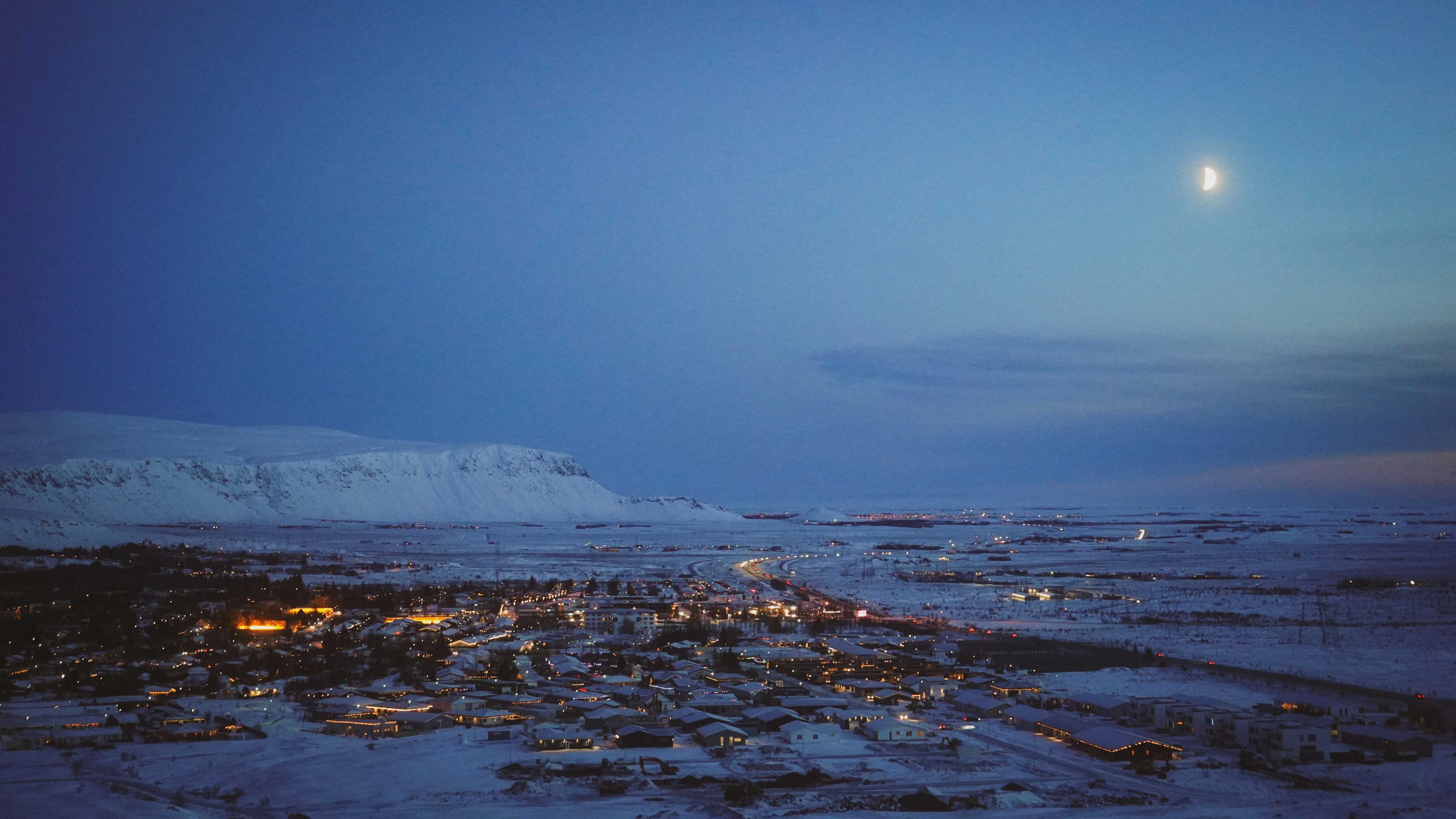
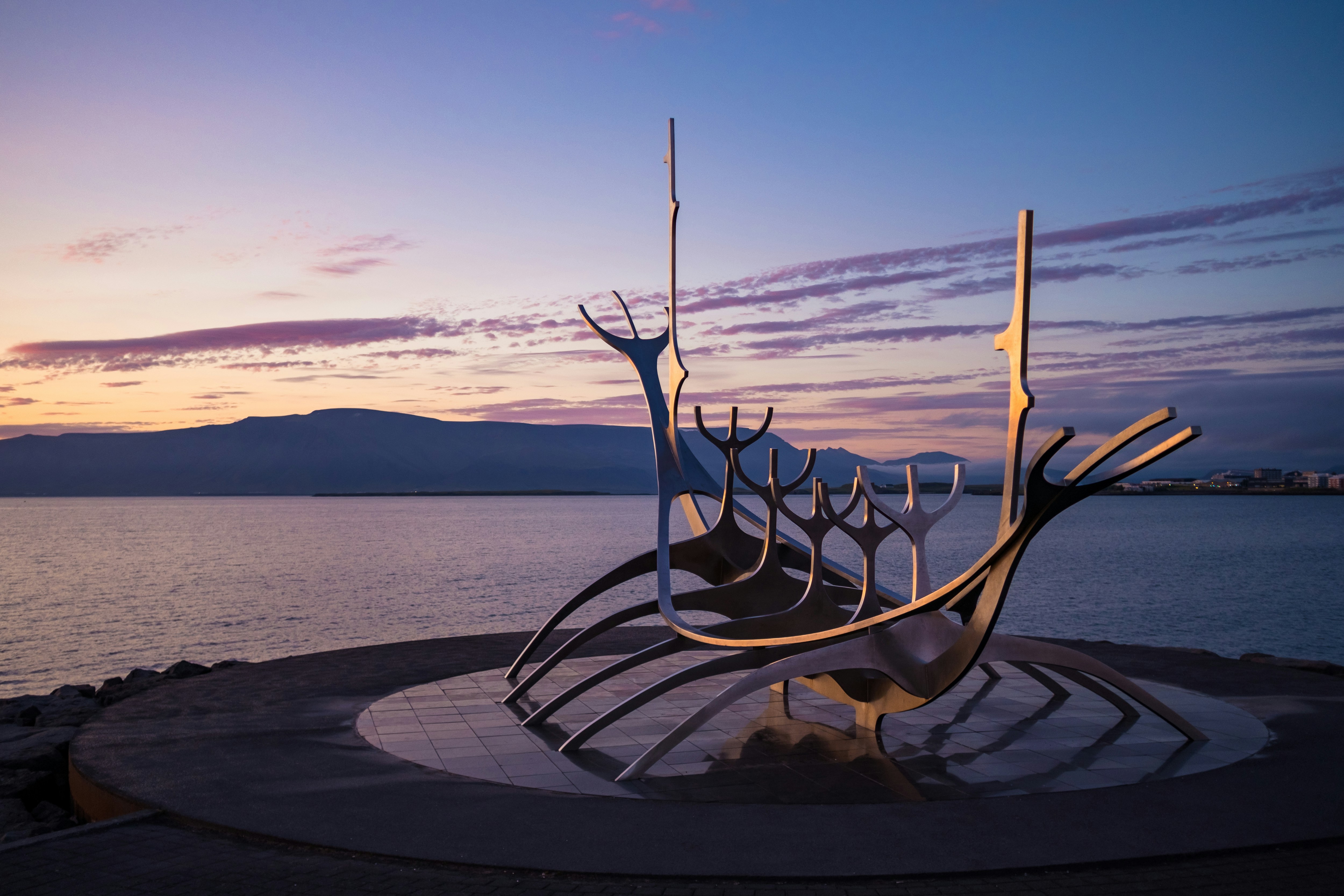
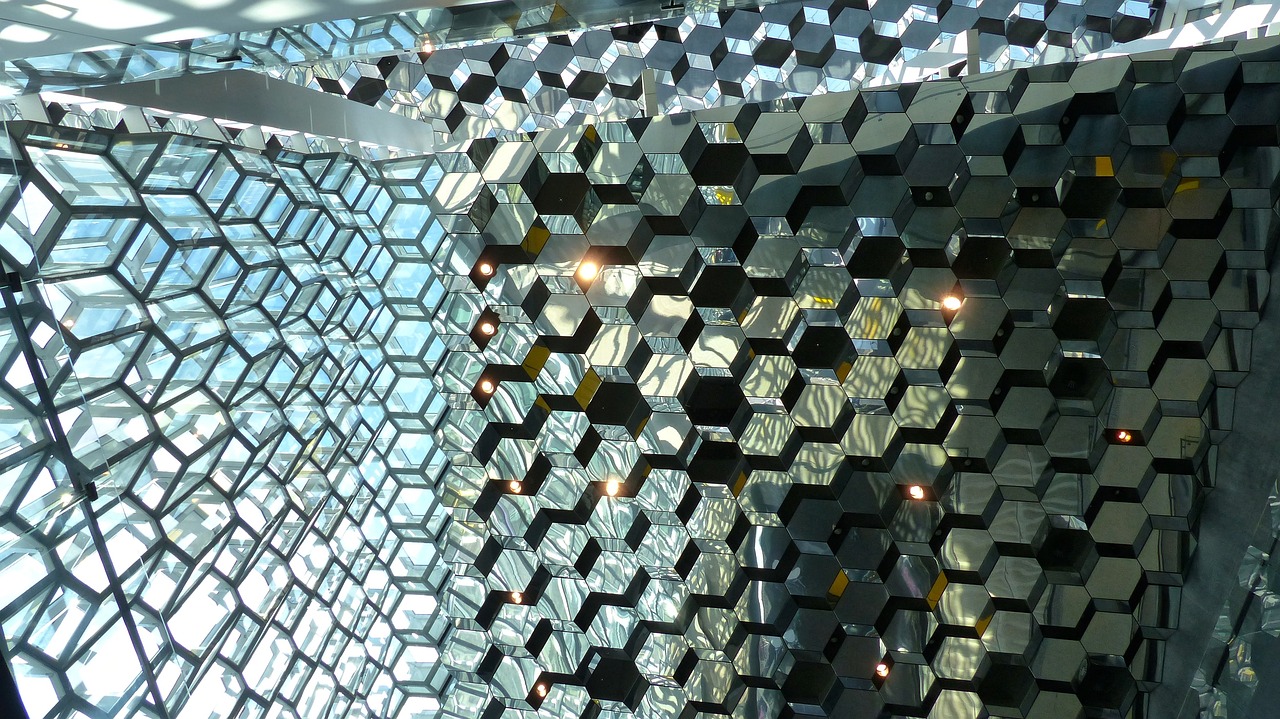
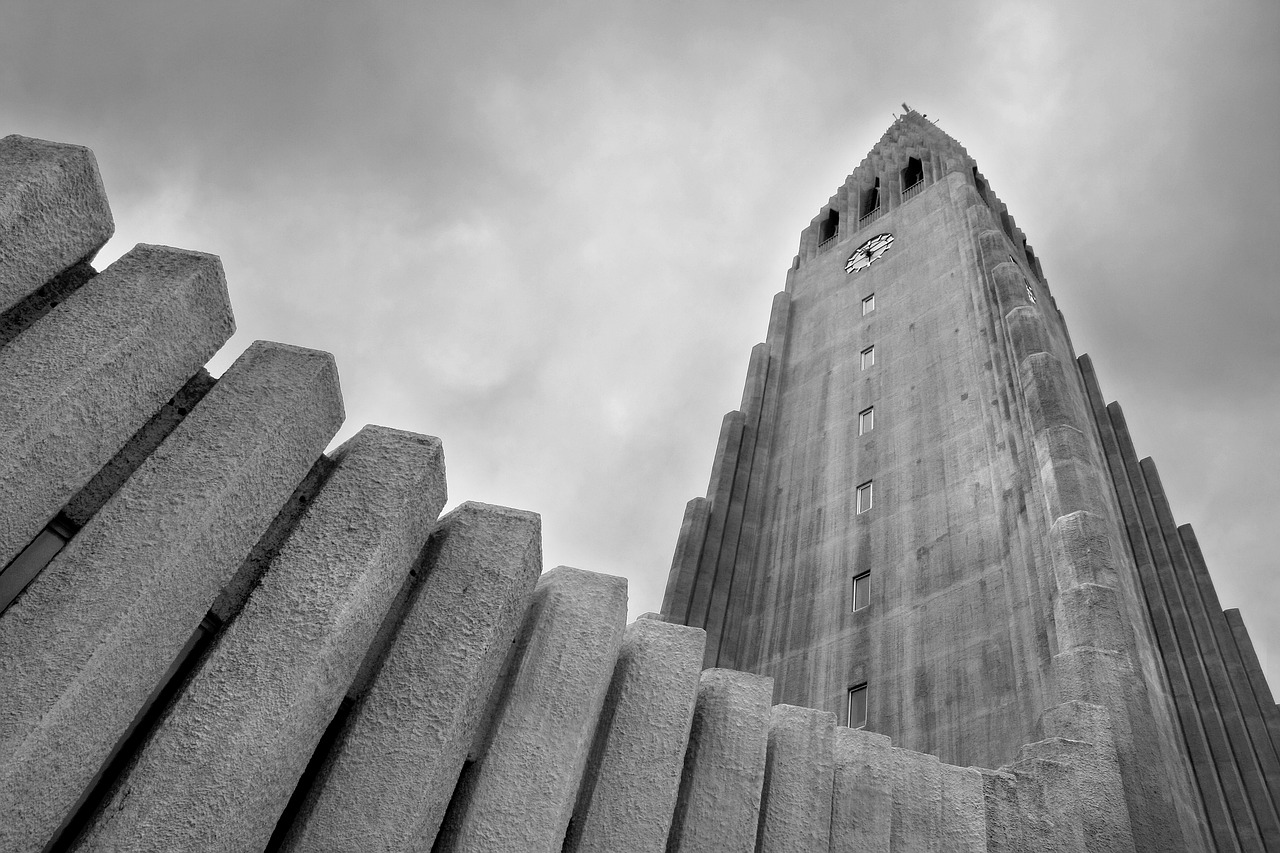
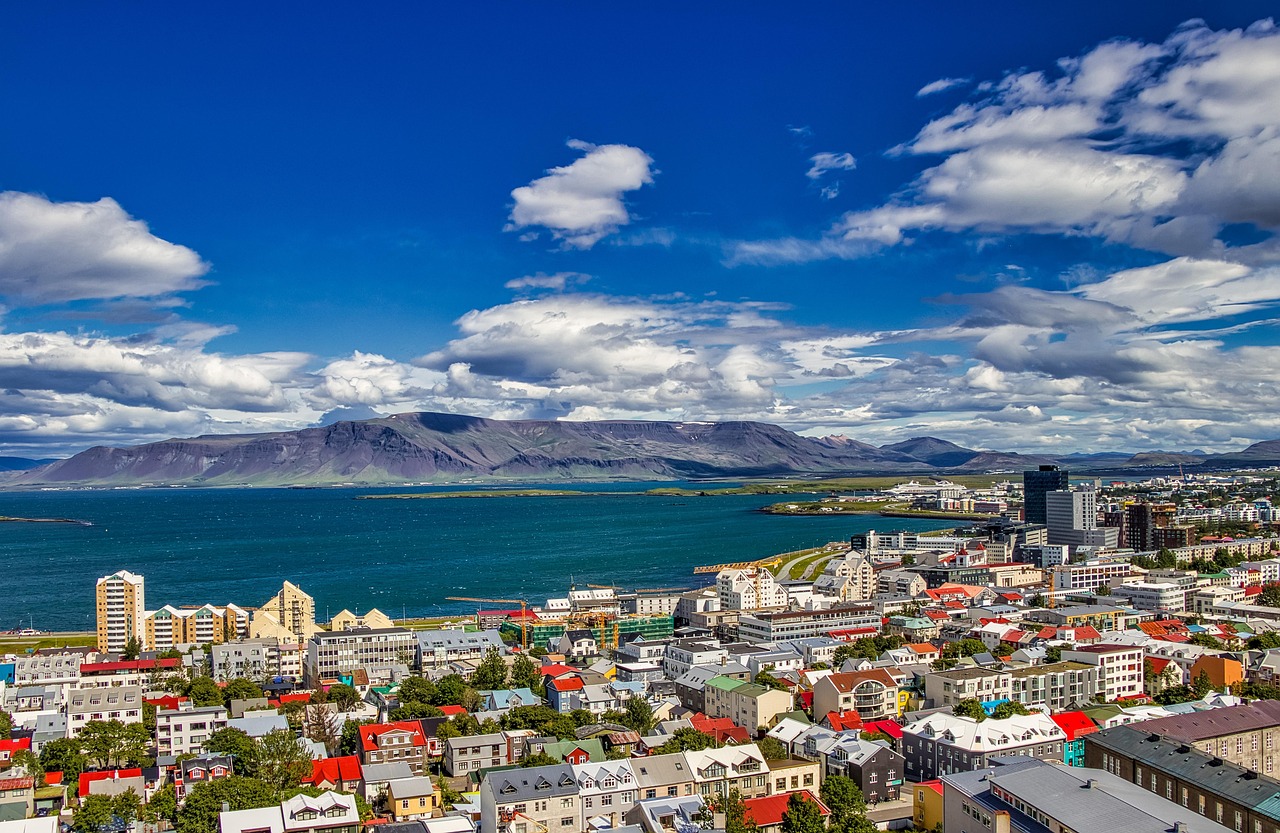
Reykjavík is the world’s northernmost capital, a compact and colourful city stretching between Faxaflói Bay and the snow-capped outline of Mount Esja. The heart of city life beats along Laugavegur, the main shopping street, and through the lanes of the Old Town, where houses clad in corrugated iron painted red, yellow and turquoise cluster around Lake Tjörnin, alive with waterfowl. Dominating the skyline is Hallgrímskirkja, the Lutheran church whose expressionist lines were inspired by basalt columns and whose tower offers sweeping views over rooftops, sea and mountains. Along the waterfront, Harpa gleams with its honeycomb glass façade catching the shifting northern light, while nearby the Sólfar sculpture, the “Sun Voyager”, traces its steel profile against the fjord. Culture has an importance far beyond the city’s size: the National Museum of Iceland recounts eleven centuries of history from the Vikings to the present day, while the Reykjavík Art Museum and the former home and studio of sculptor Einar Jónsson add to the cultural landscape. Live music venues and lively cafés animate summer evenings, when night seems almost to disappear. Reykjavík also lives through its geothermal waters: outdoor pools such as Laugardalslaug are genuine social institutions, while the geothermal beach at Nauthólsvík makes bathing possible even in winter. The city is an ideal base for exploring the Golden Circle — Þingvellir, Geysir and Gullfoss waterfall — as well as for excursions in search of the Northern Lights or whales in the waters of the bay. With Nordic design, a food scene that reinterprets fish, lamb and wild ingredients, and a creative energy out of all proportion to its size, Reykjavík is a vibrant gateway to Iceland.
Altro
Giorno 3 — Reykjavik → Grindavik
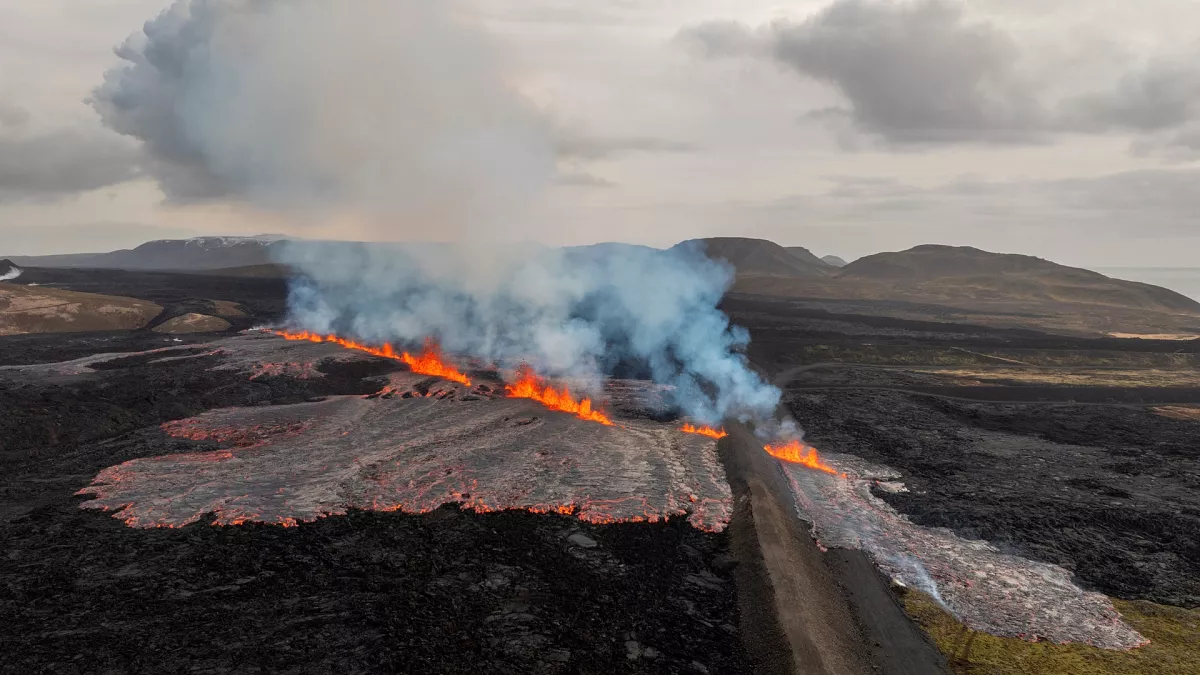
Grindavík is a lively fishing port on the Reykjanes peninsula, set in a rugged landscape of lava fields and volcanoes. It is the closest town to the famous Blue Lagoon, the geothermal spa whose milky blue waters have become the emblem of Icelandic tourism. The area is one of the most active points on the Mid-Atlantic Ridge, the scene in recent years of spectacular effusive eruptions. The harbour lives by fishing and fish processing, and the Saltfisksetur museum tells the story of salted cod. Against a backdrop of craters and lava flows, Grindavík is an intense stop for those who want to feel the Icelandic earth still alive and on the move.
Altro
Giorno 5 — Grindavik → Hveragerdi
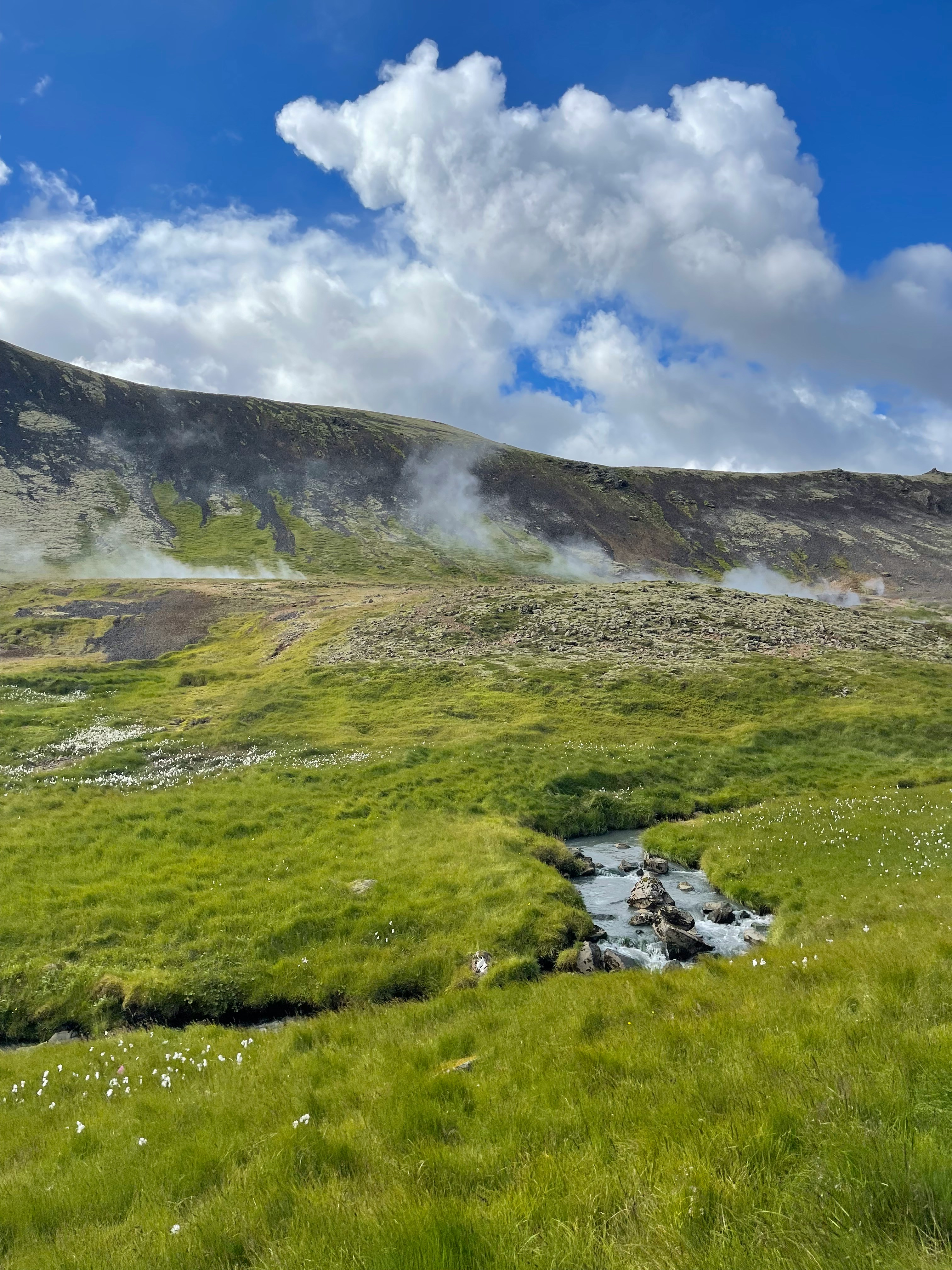
Hveragerði is known as the “town of greenhouses”, built on a geothermal area so active that hot steam rises from the ground between the houses and feeds the greenhouses where fruit, vegetables and flowers grow even in winter. At the foot of the Reykjadalur hills winds a valley where a naturally warm river flows, allowing an open-air soak after a short hike. The centre is home to a geothermal park open to visitors and a small museum, while the area''s seismic activity is told in a dedicated exhibition. A few minutes from Route 1 and the Golden Circle, Hveragerði is a curious and relaxing stop. Between steam, vegetable gardens and thermal bathing, it is one of the south''s most distinctive places.
Altro
Giorno 7 — Hveragerdi → Hella
Hella is a small service town on the banks of the Ytri-Rangá river, in the agricultural plain of the south, renowned for its salmon fishing. At the heart of a region of Icelandic-horse breeders, it offers many equestrian farms where visitors can try the breed''s unique tölt gait. Its position along Route 1 makes it a convenient base for exploring the surroundings: the Seljalandsfoss and Skógafoss waterfalls, the Geysir geothermal area and the trails towards the Landmannalaugar highlands, famous for their shimmering rhyolite mountains. The Hekla volcano, long feared as the “gateway to hell”, rises in the background. Quiet and practical, Hella is a good base in the island''s south.