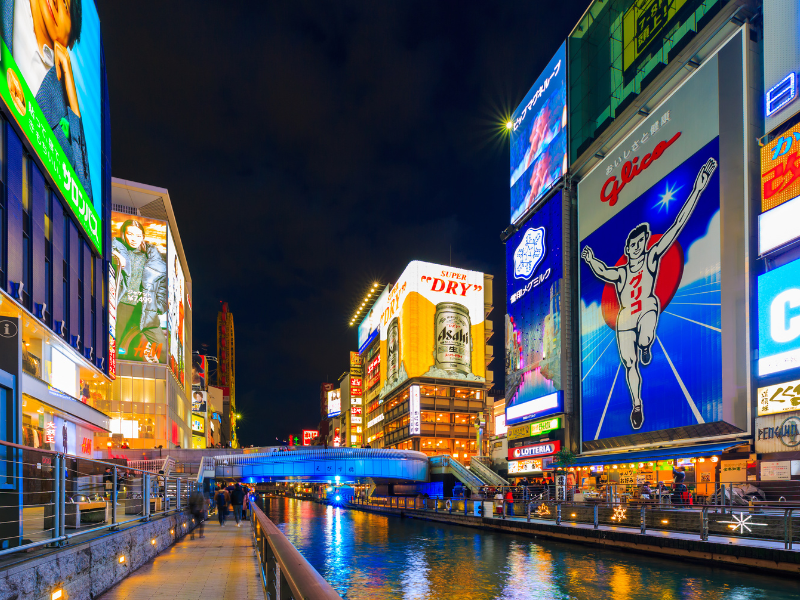
Osaka pulses with an unmistakable energy: Japan's second metropolis and the country's gastronomic capital, it is a frank, lively and generous city, where dazzling modernity coexists with the warmth of a merchant tradition centuries old. Set on the bay that shares its name, it has always been a crossroads of trade and the gateway to the heart of the Kansai region.
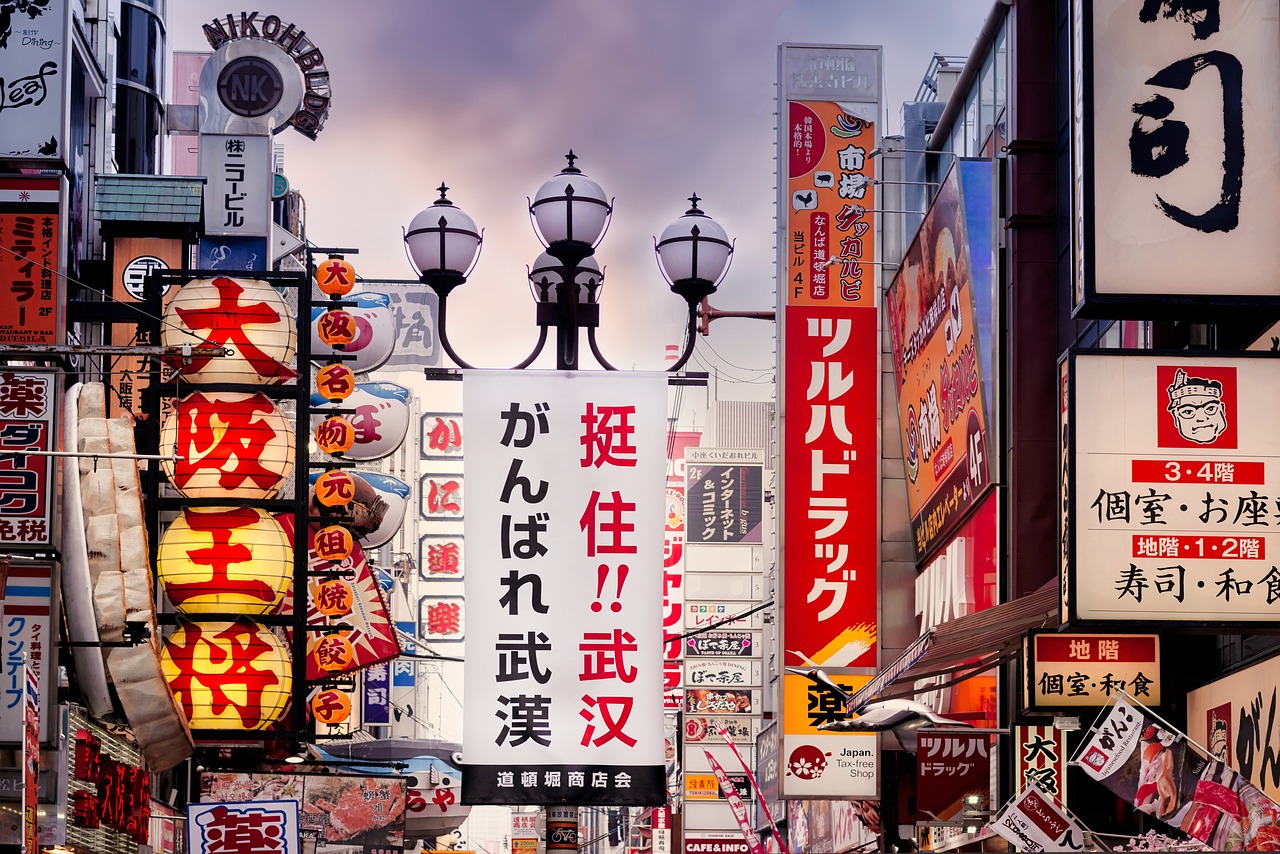
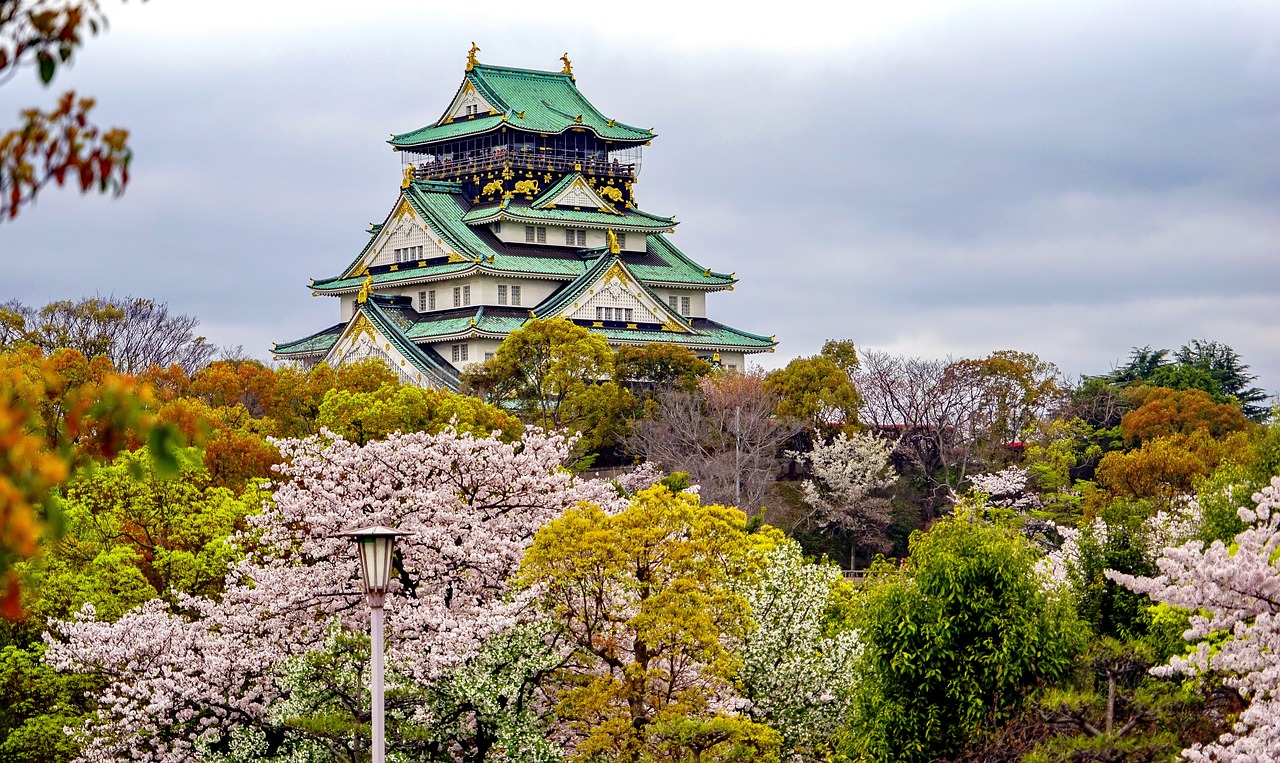
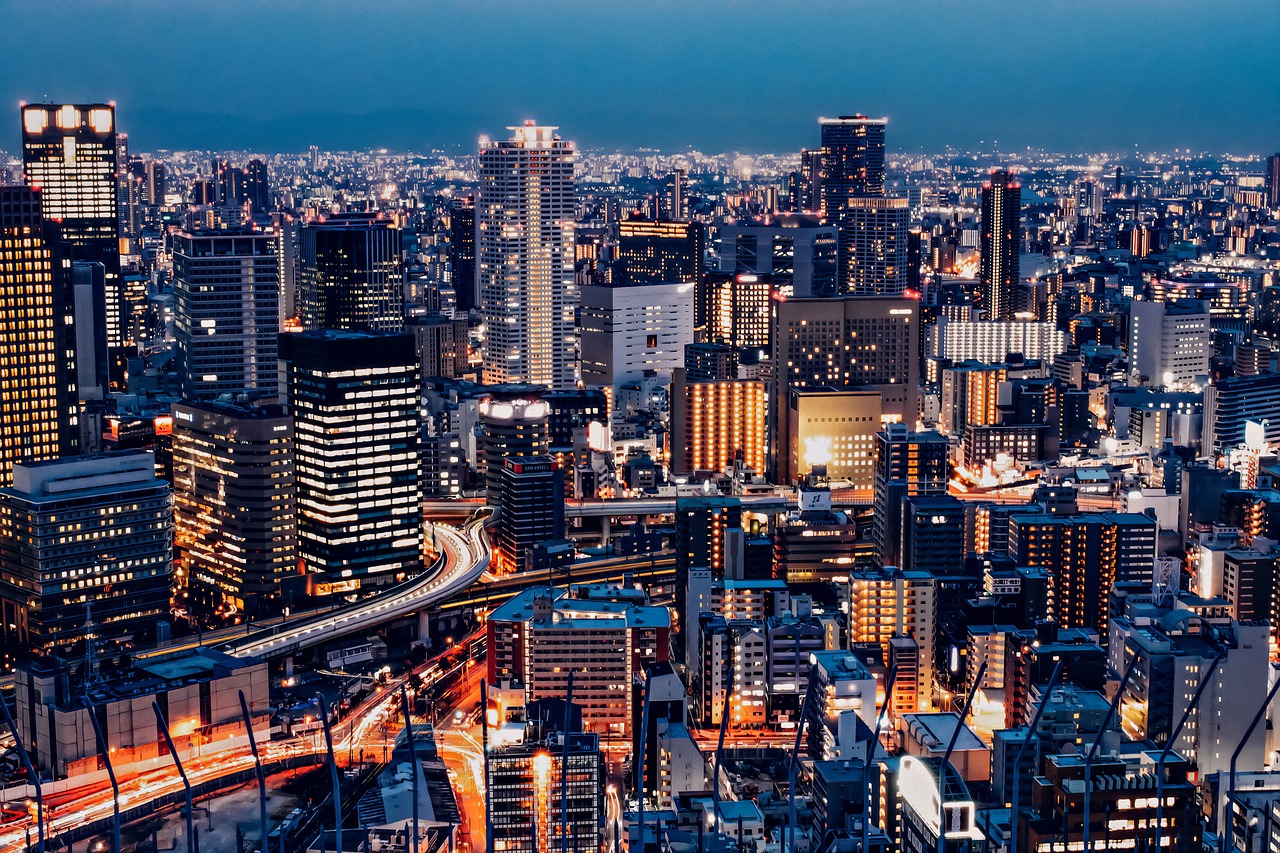
The city's symbol is Osaka Castle, an imposing reconstructed fortress that dominates a vast park, spectacular during the cherry blossom season. But it is after dusk that Osaka shines: in the Dotonbori district, along the canal, neon signs reflect on the water and the famous Glico running-man billboard has become an icon. Here comes alive the philosophy of kuidaore, "to eat until you drop": stalls serve takoyaki (octopus balls), okonomiyaki (savoury pancake) and kushikatsu skewers, in a riot of aromas and voices. Nearby, the lively Shinsekai with its Tsutenkaku tower evokes the retro Osaka of the early twentieth century, while the Namba district reigns as the realm of shopping and entertainment. For quieter moments, Shitenno-ji, among Japan's oldest Buddhist temples, and the modern skyscrapers of Umeda with their panoramic terraces offer opposite yet equally fascinating views.
Osaka is also an ideal base for excursions: Kyoto, Nara with its deer and Great Buddha, and the sanctuary of Koyasan are all within easy reach. A city with an open heart and a quick wit, Osaka wins over those seeking the most authentic and convivial Japan, to be savoured at the table and along its illuminated streets.
Treno
Giorno 2 — Osaka → Himeji → Okayama
Himeji guards one of all Japan's most beloved treasures: the majestic white castle that towers above it, the country's first site inscribed on the UNESCO World Heritage list. Nicknamed 'Shirasagi-jo', the White Heron Castle, for its gleaming walls and the elegance of roofs that seem like outspread wings, it is the most imposing example of feudal architecture left intact in the nation, with its intricate system of courtyards, ramparts and defensive keeps. At its foot lies Koko-en, a collection of nine Edo-style gardens perfect for a contemplative walk among ponds and tea pavilions. The city also offers a taste of provincial Japanese life, with lively streets and specialities such as anago, the conger eel. Himeji reveals its full beauty when the castle turns to gold at sunset. Okayama lies in western Japan and is known above all for Korakuen, one of the country's three finest landscape gardens, where ponds, streams and artificial hills are arranged in full view of Okayama Castle, nicknamed the "Crow Castle" for its black walls. The city is tied to the legend of Momotaro, the hero born from a peach, celebrated in statues and traditional sweets. From here, excursions reach nearby Kurashiki, with its picturesque canal quarter and elegant historic storehouses, and the islands of the Seto Inland Sea, accessible along the scenic Shimanami Kaido cycling route. A mild climate and seafood cuisine make Okayama a pleasant and authentic base.
Treno
Giorno 3 — Okayama → Uno → Naoshima Island → Okayama
Uno is a quiet harbour town on the Seto Inland Sea, in Okayama Prefecture. Its port is the main gateway to the celebrated art islands, foremost among them Naoshima, reached by a short ferry crossing. The town itself welcomes travellers with contemporary installations and sculptures, such as the colourful totem-fish made from recycled materials that greets arrivals on the quayside. With its sea views, scattered islets and laid-back mood, Uno is the perfect starting point for exploring one of Japan's most creative corners. Naoshima is a small island in the Seto Inland Sea transformed into a remarkable open-air museum, where contemporary art, architecture and landscape converse in perfect harmony. Dotted with museums designed by architect Tadao Ando — among them the celebrated Chichu Art Museum, largely carved underground so as not to disturb the contour of the hills — the island hosts installations by world-renowned artists, from Yayoi Kusama's iconic yellow polka-dot pumpkin set on the pier to the house-artworks of the Art House Project. Among quiet beaches, fishing villages and artworks scattered everywhere, Naoshima is best explored by bicycle, revealing a new emotion at every turn. Naoshima is the unmissable destination for those who love art and wish to experience it in an unusual and poetic setting.
Treno
Giorno 4 — Okayama → Kurashiki → Hiroshima
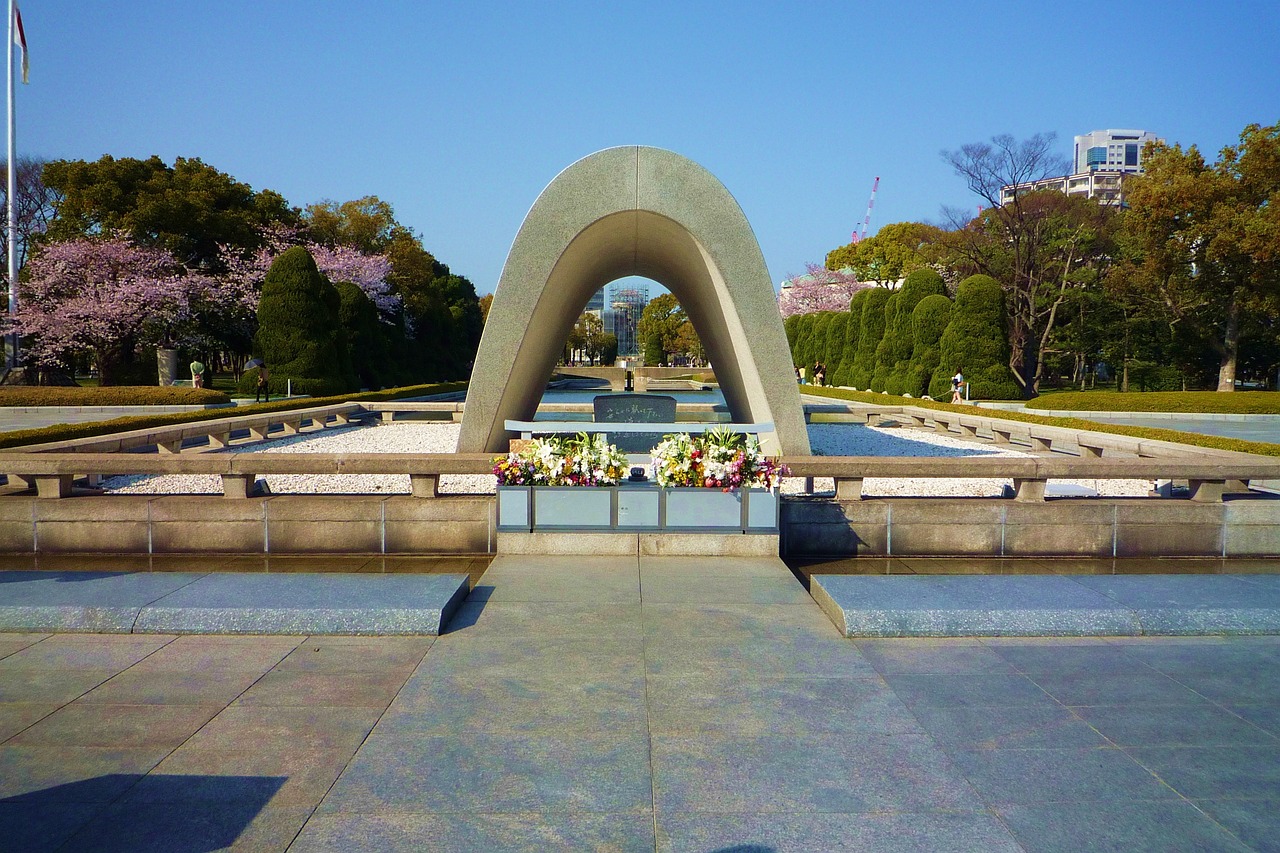
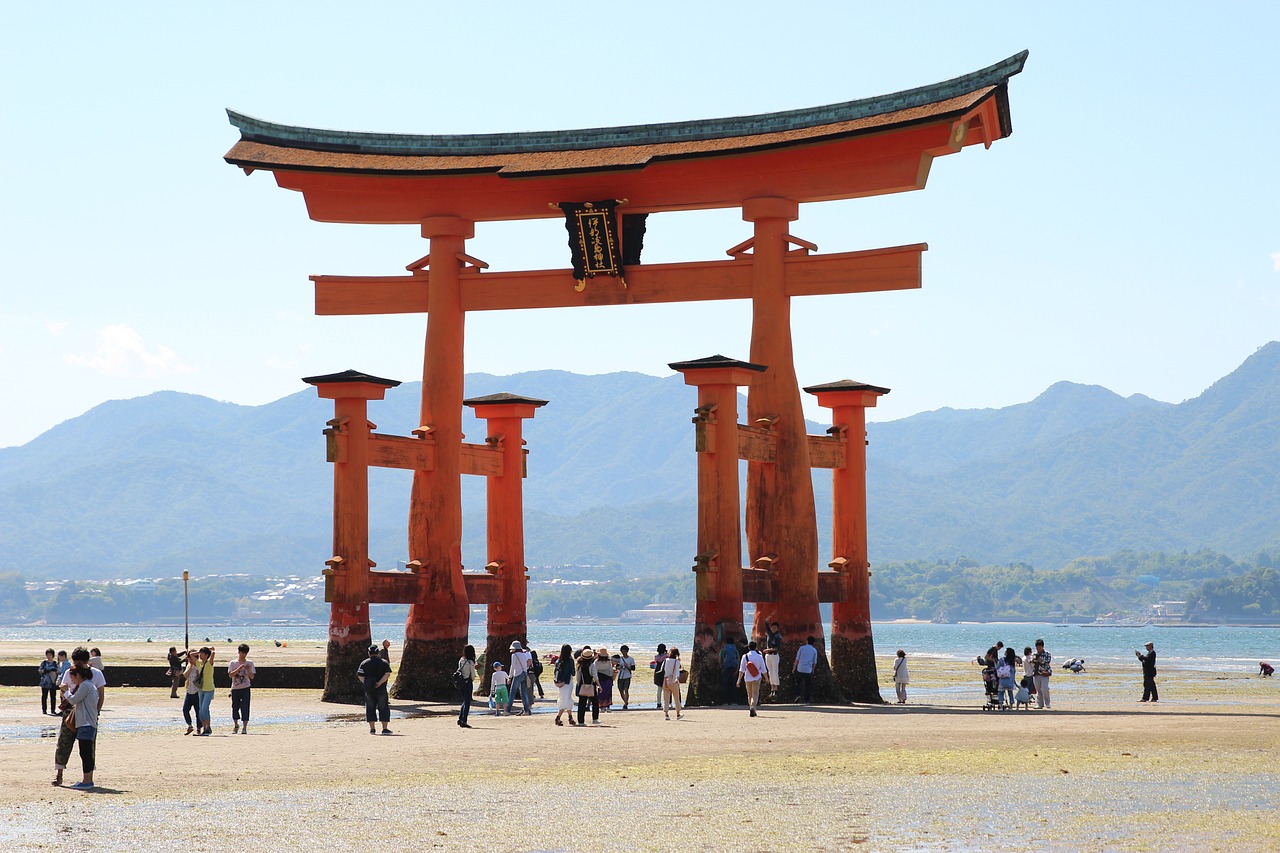
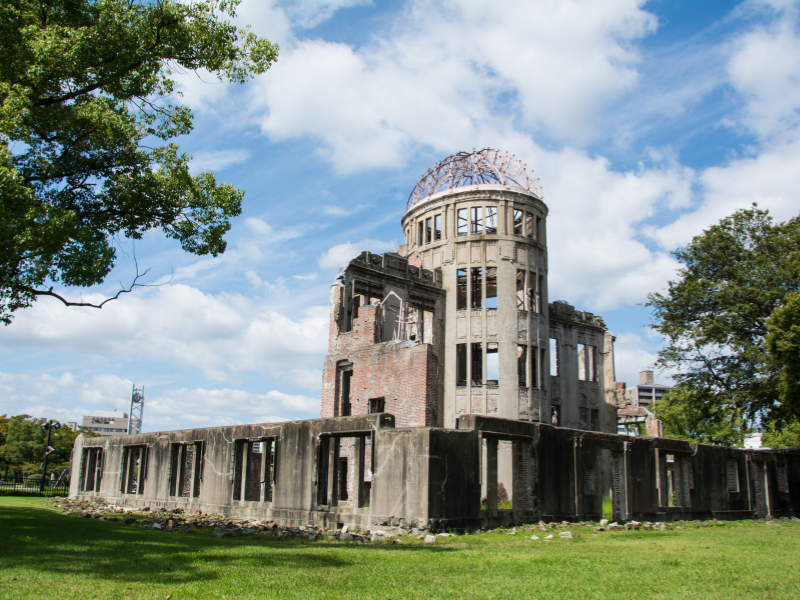
Kurashiki preserves one of Japan's most poetic settings, with its historic Bikan quarter crossed by a canal lined with white-walled, dark-roofed wooden warehouses, a legacy of the thriving rice and textile trade of the Edo era. Along the banks, swaying willows and rowing boats accompany a stroll among artisan workshops, cafés and galleries. Here stands the Ōhara Museum of Art, Japan's first museum dedicated to Western art, with works by El Greco, Monet and Picasso. The streets conceal denim workshops — Kurashiki is the capital of Japanese jeans — and tea houses in which to rest. A short distance from the Seto Inland Sea, the city is a refined balance of history, art and atmosphere, to be discovered slowly. Hiroshima is reborn today as a vibrant, luminous city, a universal symbol of peace after the tragedy of 1945. The Peace Memorial Park preserves its memory around the Atomic Bomb Dome, a UNESCO World Heritage Site, and a museum that recounts with restraint both catastrophe and hope. Rebuilt along its six rivers, the city offers tree-lined boulevards, its castle and the Shukkei-en garden. Its cuisine is famous for the local style of okonomiyaki, a layered pancake of noodles and cabbage. A short trip away lies the island of Miyajima, where the red torii of Itsukushima Shrine — also UNESCO-listed — appears to float on the water at high tide. Hiroshima unites the power of memory with the warmth of a city looking to the future.
Traghetto
Giorno 5 — Hiroshima → Miyajima
A UNESCO World Heritage Site venerated for centuries as a sacred island, Miyajima rests in the waters of the Seto Inland Sea, a short ferry crossing from Hiroshima. Its emblematic image is the great vermilion torii of the Itsukushima shrine which, at high tide, appears to float on the sea, offering one of Japan’s most celebrated views. The shrine itself, built on stilts and linked by walkways, reveals itself differently with every tide. Beyond the village one climbs, by ropeway or on foot through the forests, to the summit of Mount Misen, where panoramas over the surrounding islands reward the ascent and gentle deer accompany visitors. Along the village lanes one savours grilled oysters, the local speciality, and momiji manju, maple-leaf-shaped sweets. In autumn Momijidani-koen blazes with vivid reds. Miyajima enchants in the silence of dawn, when the torii emerges from the mist.
Treno
Giorno 6 — Miyajima → Hiroshima → Kobe → Osaka
Hemmed between the sea and the Rokko mountains, Kobe is one of Japan's most elegant and cosmopolitan port cities, facing the bay of Osaka. Opened to international trade in the mid-19th century, it preserves in the Kitano district its ijinkan, the refined former residences of foreign merchants, and in Nankinmachi one of the country's liveliest Chinatowns. The Meriken Park waterfront and the famous Kobe Port Tower trace a skyline that glitters by night, while a cable car climbs towards the hot springs of Arima Onsen and the gardens on the slopes of Rokko. The city's name is legendary worldwide for Kobe beef, the exquisitely marbled meat served teppanyaki style. Between sea views, flavours of excellence and an international atmosphere, Kobe reveals itself as a city to be savoured.
_20260505144824.png)
_20260505144824.png)
_20260505143332.png)
_20260505143332.png)

_20260505142906.png)