Giorno 2 — Beruwala → Yala → Tissamaharama
Breakfast. Departure for Galle. Visit to Galle Fort and the Dutch Museum.
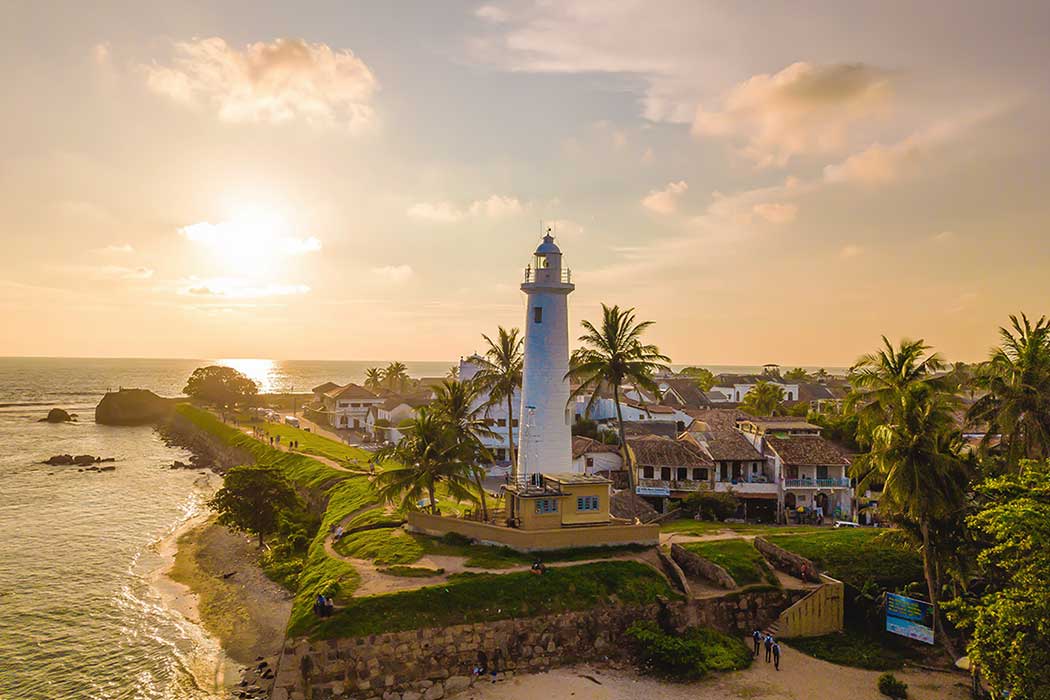
Galle was one of the most important ports in Ceylon, as the British called what is now Sri Lanka. This ‘living’ UNESCO World Heritage Site is the port where the Portuguese first landed in Sri Lanka in 1505.
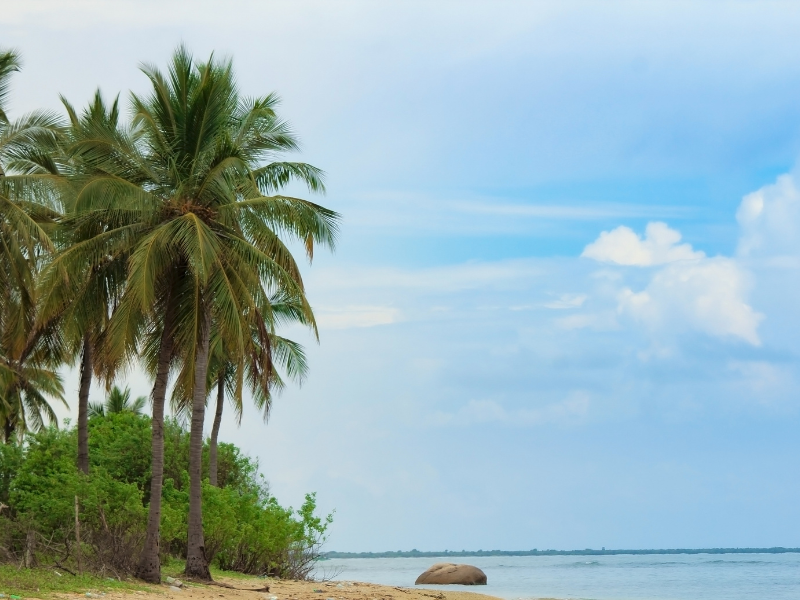
It was later conquered and fortified by the Dutch, who dominated Sri Lanka’s coastal region in the 17th and 18th centuries. Even today, the town retains an atmosphere reminiscent of old Holland. Within the 90-acre fort, well-preserved with ramparts dating back to 1663, there are old churches and monuments bearing coats of arms, an imposing entrance surmounted by a monogram from 1669, many perfectly preserved Dutch houses and narrow alleys that still bear Dutch names. The New Oriental Hotel, built for a Dutch governor in 1684, is a true colonial gem, now transformed into the renowned luxury hotel Amangalla. Other excellent boutique hotels also bear witness to the historical and cultural significance of this charming destination. Departure for Yala (circa 3 ore e mezza di trasferimento). Lunch at a restaurant. In the afternoon, jeep safari in Yala National Park. This is the most visited and the second largest national park in Sri Lanka. It currently consists of five blocks, two of which are open to the public. The blocks have individual names, such as Ruhuna National Park for block 1 (the most famous) and Kumana National Park or Yala East for the adjoining area. The park lies in the south-eastern region of the country, in the Southern Province and Uva Province. It covers an area of 979 km² and is approximately 300 km from Colombo. Together with Wilpattu National Park, it was one of the first two national parks in Sri Lanka, having been founded in 1938. It plays an important role in the conservation of the Sri Lankan elephant and for the presence of water birds. It is home to 215 bird species, including six endemic to Sri Lanka, and among the migratory birds flamingos predominate. It lies in a climatic transition zone, subject to the north-east monsoon. The landscape is therefore typical of the East African savannah, with many waterholes and marshes. It has an extensive seafront with still-pristine beaches, broken up by mangrove woodland. There are numerous coastal lagoons populated by crocodiles. Offshore lie two submerged coral formations known as the Little & Great Basses, on which two lighthouses have been placed emitting a white and red light. In these waters dolphins and blue whales are easily spotted. Elephants, crocodiles, Indian buffaloes, wild boar and deer are the most common animals. The most common monkeys are the grey langur. Leopards, on the other hand, are hard to come across despite Yala having the highest density of leopards in the world. Important: several tour agencies and hotels around Yala, although they offer jeep excursions, in fact limit themselves to a drive outside the outer perimeter without entering it. Even if the park is entered and accommodation has not been booked in one of the 8 bungalows inside the park, you will have to leave before sunset. Dinner at the hotel.
_20260413095945.png)
_20260413095945.png)
_20260413095945.png)
_20260625095243.jpg)
_20260625095244.jpg)
_20260625095244.jpg)